
Guides
Arabica vs robusta: the two coffee species compared
Almost all the world’s coffee comes from two species: arabica and robusta. They differ in how they are grown, in caffeine and above all in taste. Knowing the differences also explains why some bags say “100% Arabica”.
Two plants, two characters
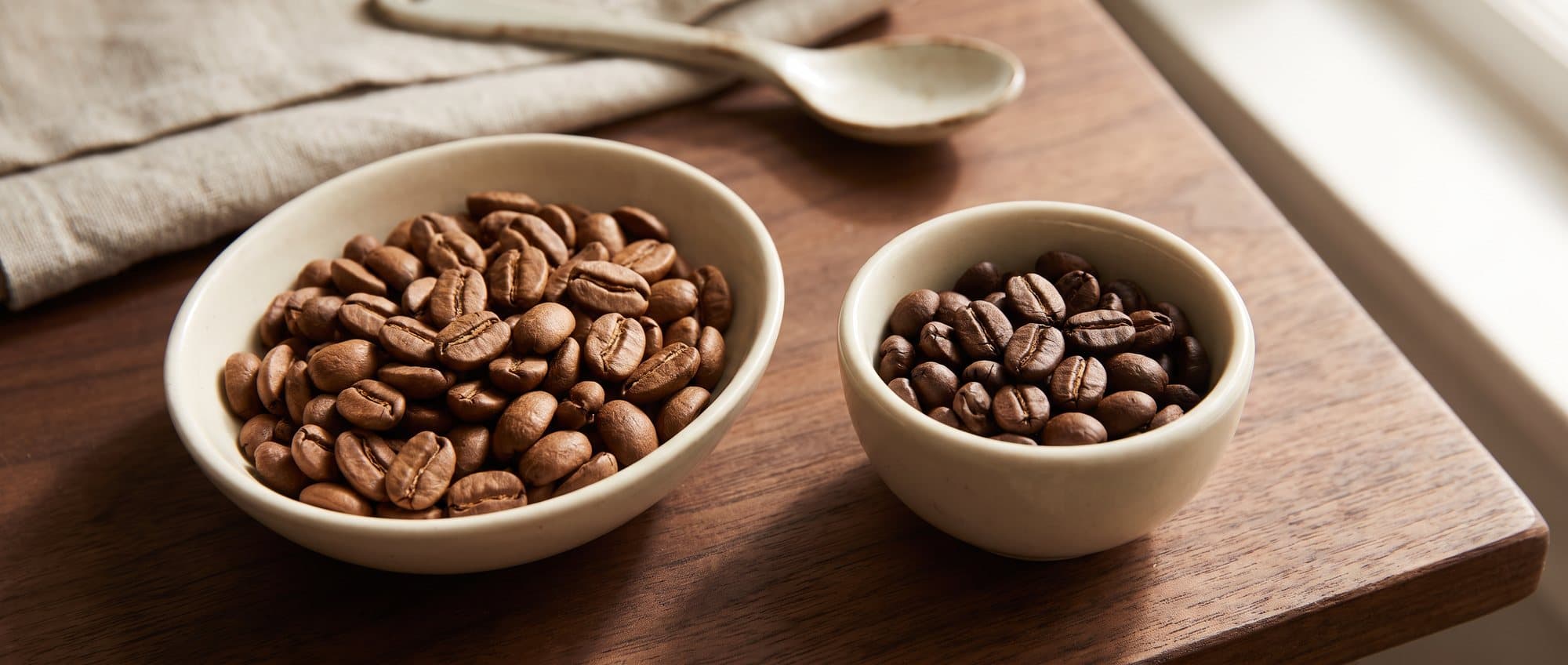
Botanically, coffee belongs to the genus Coffea. Of the more than a hundred known species, only two are grown on a large scale: Coffea arabica, or arabica, and Coffea canephora, usually sold as robusta. Together they account for almost all world production – roughly 60% arabica and 40% robusta, varying a little from year to year.
Arabica originally comes from the highlands of Ethiopia and is the older crop. Robusta is native to West and Central Africa and was only planted widely from the late 19th century, mainly because the plant is hardier.
The differences at a glance
The values below are typical ranges. Individual coffees can differ depending on variety, region and processing.
| Arabica | Robusta | |
|---|---|---|
| Plant | Coffea arabica | Coffea canephora |
| Altitude | usually around 900–2,200 m | usually below 900 m |
| Caffeine (green coffee) | approx. 1.2–1.5% | approx. 2–2.7% |
| Sugars and oils | more sugars, more oils | fewer sugars, fewer oils |
| Taste | complex, fruity to chocolatey, fine acidity | strong, earthy, bitter, low acidity |
| Bean shape | oval, curved centre crease | smaller, rounder, straight crease |
| Cultivation | demanding, more prone to disease | hardy, higher yield |
| Share of world output | roughly 60% | roughly 40% |
Taste: why arabica is considered finer
Arabica grows at higher, cooler altitudes. The cherries ripen more slowly there, and the beans develop more sugars and aromatic compounds. Roasting turns these into notes of fruit, flowers, nuts, caramel or chocolate, with a pleasant, delicate acidity.
Robusta tastes stronger and more bitter, often earthy or woody, with little acidity. Its caffeine – about twice as much – adds bitterness too. That is not a flaw but a different character: in many Italian espresso blends a share of robusta gives a dense crema and a powerful finish.
The caffeine in your cup also depends on dose, grind and brew method. A double espresso from 18 g of coffee and a large cup of filter coffee from about 15 g therefore contain a similar amount of caffeine – even though the espresso tastes stronger.
How to recognise arabica coffee beans
The bag usually says so clearly. If not, a few clues help:
- Shape: arabica beans are elongated and oval, with a slightly S-shaped centre crease. Robusta is smaller and rounder, with a straight crease.
- Labelling: “100% Arabica” means no robusta at all. Just “arabica” in the ingredients often means a blend.
- Origin: high-grown single origins, from Ethiopia, Kenya or Central America for example, are almost always arabica.
- Taste: clear, fruity acidity and lots of aroma point to arabica; very bitter, rubbery notes rather to robusta.
Arabica or robusta – which suits you?
If you drink your coffee black and want to taste an origin, arabica is the better choice. It works for every brew method – filter, French press, espresso – and shows its range best without milk and sugar.
If you want a very strong, bitter espresso with lots of crema, or simply more caffeine, a blend with some robusta may suit you better. Within arabica there are also many varieties – origin, processing and roast shape the flavour at least as much as the species.
Ethera Single Origin Ethiopia is 100% arabica from the Ethiopian highlands, the plant’s homeland. The medium roast makes it balanced and round – enough body for espresso and cappuccino, enough freshness for filter and French press.
Frequently asked questions
Does arabica have less caffeine than robusta?
Yes. Green arabica contains about 1.2–1.5% caffeine, robusta about 2–2.7% – roughly twice as much.
Is arabica better than robusta?
Arabica is considered more aromatic and refined, robusta stronger and more bitter. Which is “better” depends on your taste and brew method.
What does “100% Arabica” mean?
That the coffee consists only of beans of the species Coffea arabica, with no robusta.
Is arabica good for espresso?
Very much so. A pure arabica espresso is usually a little milder and fruitier, with a finer crema than a blend with robusta.
Are there different arabica varieties?
Yes – for example Typica, Bourbon and the many Ethiopian heirloom varieties. They differ in yield, hardiness and flavour.
More guides
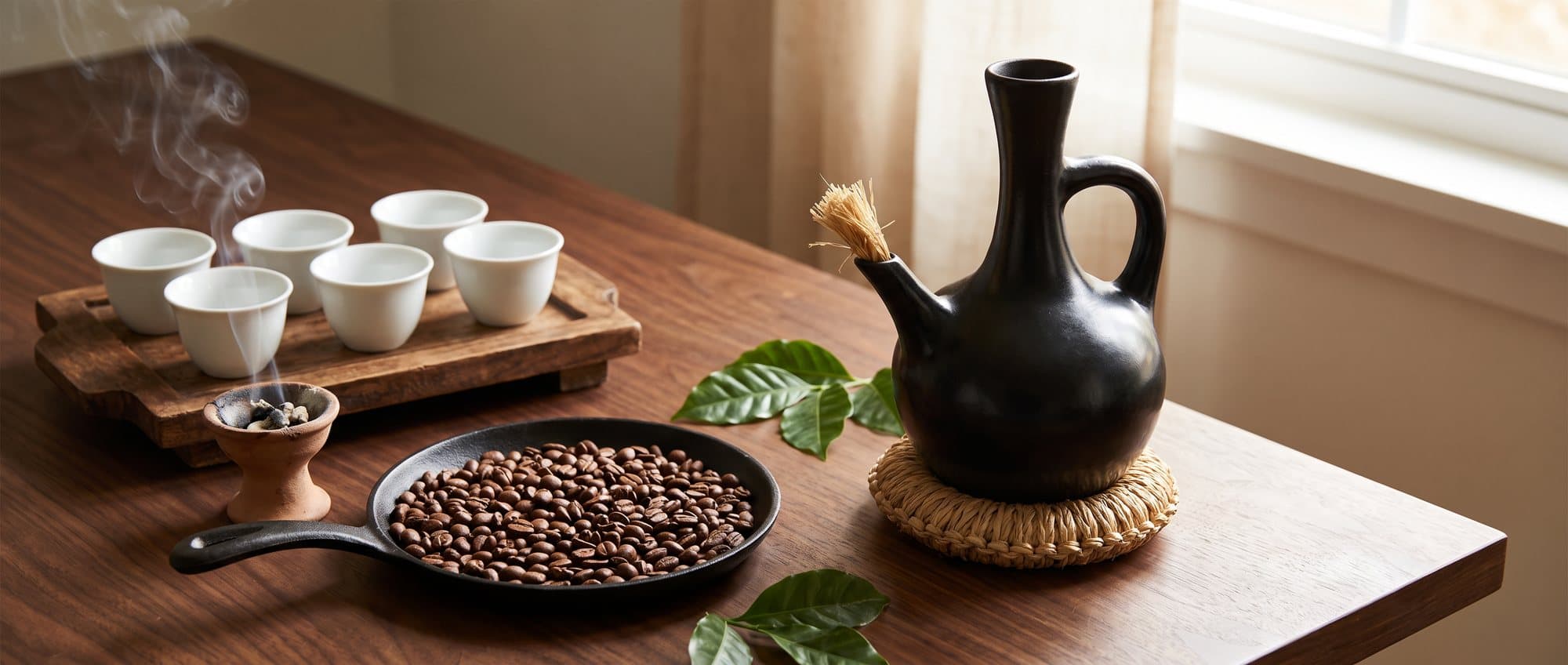
Ethiopian coffee: from the land where it all began
Birthplace of arabica, typical flavours, processing and the coffee ceremony – an overview.
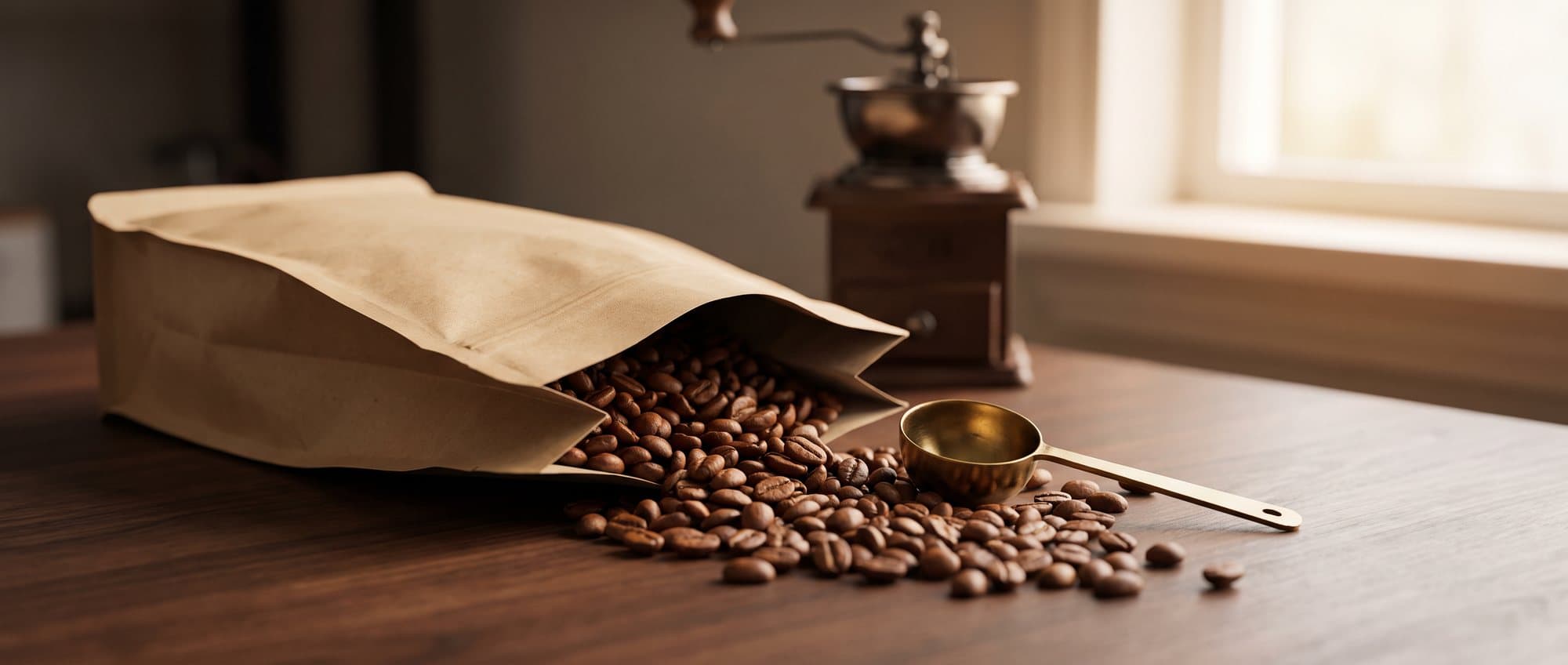
Buying coffee beans: a practical guide
Freshness, origin, roast and bag size: six criteria for buying coffee – and how ordering Ethera works.
How to make espresso with a portafilter machine
18 g in, 36 g out, 25–30 seconds: the base recipe for a portafilter machine, the right beans and milk foam for cappuccino.