
Guides
How to make espresso with a portafilter machine
Good espresso is dense and sweet, with a hazelnut-brown crema. With a portafilter espresso machine you can make it at home – as long as dose, grind and time work together. Here are the numbers, the steps and a short detour into cappuccino.
The base recipe
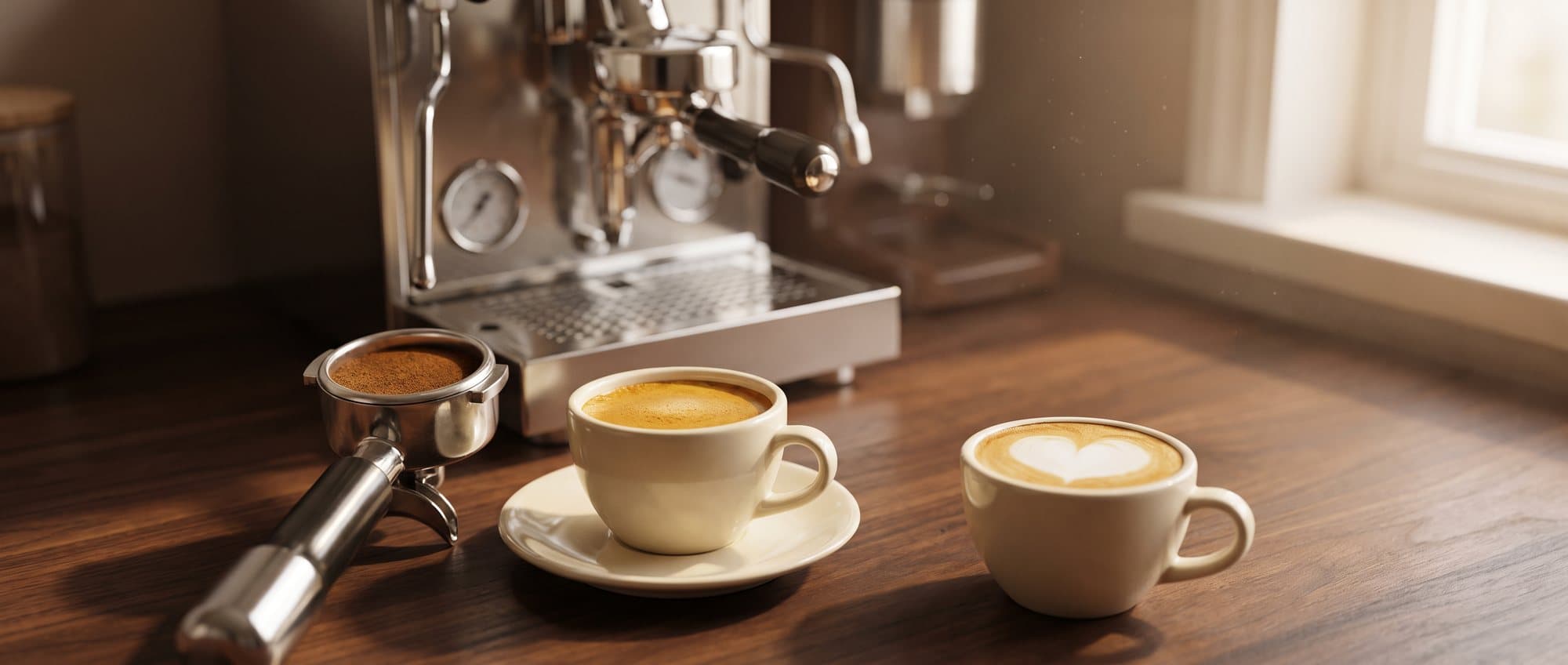
For a double espresso, grind 18 g of coffee fine and pull about 36 g of espresso in 25–30 seconds. The 1 : 2 ratio is the classic starting point; adjust to taste from there.
| Guide value | Adjust if … | |
|---|---|---|
| Coffee (dose) | 18 g in a double basket | basket too full or empty: ±1 g |
| Yield | about 36 g in the cup | too intense: up to 40 g; too thin: down to 32 g |
| Grind | fine | runs too fast: finer; too slow: coarser |
| Water | 93 °C | sour: 1 °C hotter; bitter: 1 °C cooler |
| Shot time | 25–30 seconds | measured from when the pump starts |
Step by step on a portafilter machine
How to pull an espresso on a portafilter espresso machine.
- 01Heat up
Let the machine heat for at least 15–20 minutes with the portafilter locked in, so group and portafilter hold temperature. Warm the cups on top.
- 02Grind and dose
Grind 18 g of coffee fine right before brewing and put it in the clean, dry portafilter.
- 03Distribute and tamp
Spread the grounds evenly and tamp level. What matters is not maximum force but a flat, even bed.
- 04Flush and lock in
Run a little water through the group, lock in the portafilter and start the shot straight away.
- 05Pull the shot
At 93 °C, pull about 36 g of espresso in 25–30 seconds – ideally with scales under the cup.
- 06Taste and adjust
If it runs fast and tastes sour, grind finer. If it runs slow and tastes bitter, grind coarser. Change one thing at a time.
Which espresso beans?
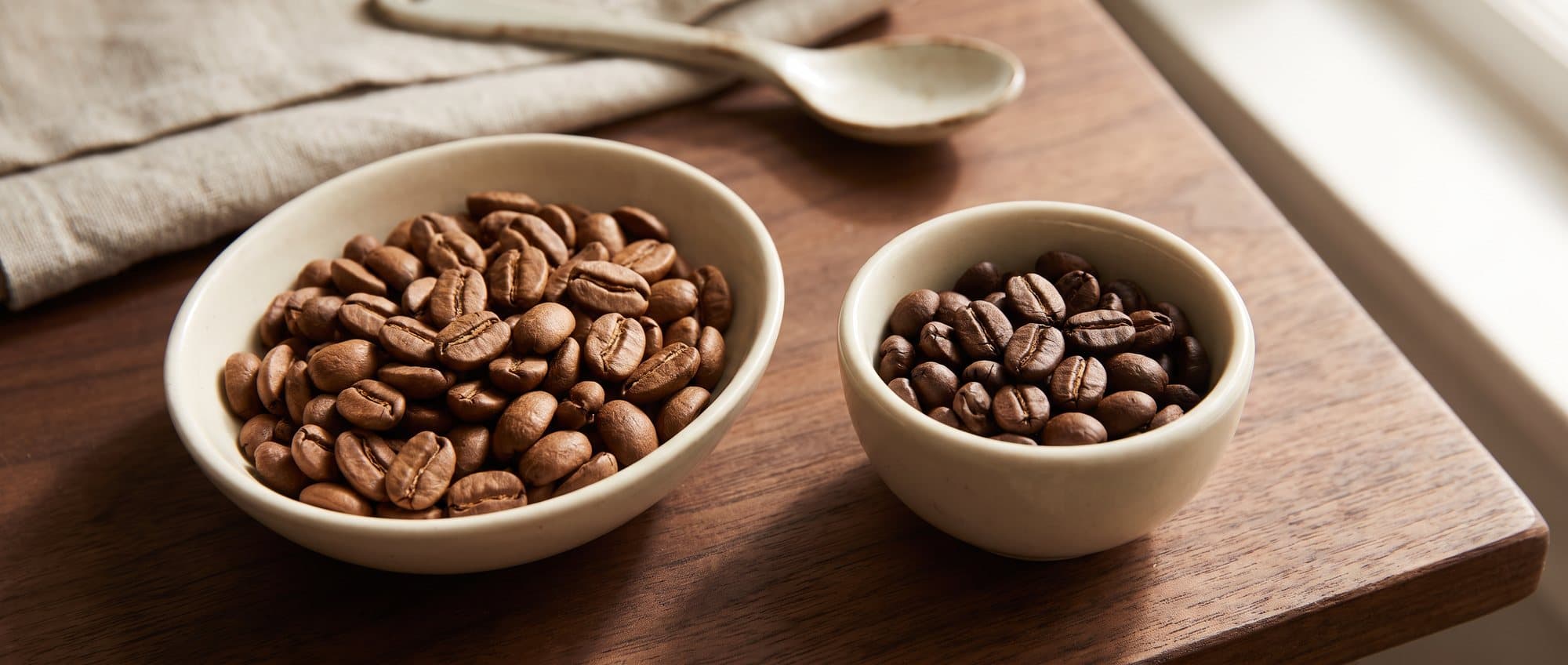
There is no such thing as a special “espresso bean” – espresso is a brew method, not a variety. What matters is roast, freshness and origin. Many classic espresso blends are dark roasted and contain robusta for more bitterness and crema.
A medium-roast arabica makes a sweeter, rounder espresso with less bitterness. It needs a little more care when dialling in the grind but rewards you with more flavour – straight or with milk.
For a portafilter machine, always buy whole beans. Espresso is very sensitive to grind size, and pre-ground coffee is rarely fine enough and loses aroma quickly.
Ethera Single Origin Ethiopia is a medium-roast, 100% arabica from the Ethiopian highlands. For espresso we recommend whole beans, freshly ground in your own grinder.
Dialling in your espresso
It is worth checking the grind with every new bag. These signs help:
- Under 20 seconds, pale thin crema, sour taste: grind finer.
- Over 35 seconds, very dark crema, bitter and dry: grind coarser.
- Espresso spurts or runs unevenly: distribute better and tamp level.
- Flat taste despite the right time: use fresher beans or heat the machine longer.
How to make a cappuccino
A cappuccino is one espresso plus about 120–150 ml of steamed milk with fine, glossy foam. Whole milk is the easiest to foam; cold milk straight from the fridge gives you more time.
- Fill the jug a third full with cold milk and purge the steam wand briefly.
- Hold the tip just below the surface and draw in air until the milk grows by about a third.
- Sink the tip deeper and let the milk swirl until the jug is too hot to hold (about 60–65 °C).
- Tap and swirl the jug, then pour the milk straight into the freshly pulled espresso.
Don’t heat milk above 70 °C – it loses its sweetness and the foam turns coarse.
Frequently asked questions
How much coffee for an espresso?
18 g for a double, about 9 g for a single. The yield in the cup is twice the dose.
Which beans are best for espresso?
Any roast can work. Medium-roast arabica makes a sweet, round espresso; dark blends with robusta taste stronger and more bitter.
Why does my espresso run too fast?
Usually the grind is too coarse or the dose too small. Grind finer and check there are 18 g in the basket.
Can I use pre-ground coffee in a portafilter machine?
It works, but you can’t adjust the grind and the aroma fades faster. Freshly ground beans make much better espresso.
How hot should milk be for cappuccino?
About 60–65 °C. Hotter than that, the milk loses sweetness and the foam turns coarse.
More guides
How to make moka pot coffee
Medium-fine grind, no tamping, medium heat: how to get moka pot coffee right – and which coffee to buy for it.
Buying coffee beans: a practical guide
Freshness, origin, roast and bag size: six criteria for buying coffee – and how ordering Ethera works.
Arabica vs robusta: the two coffee species compared
Plant, altitude, caffeine, taste: what sets arabica apart from robusta – with a comparison table.