
Guides
How to make filter coffee
Filter coffee is clean, aromatic and easy to drink – and a pour over takes just a few minutes. Get the dose, grind and water temperature right and you will get the same good cup every morning.
The base recipe
For 500 ml of filter coffee – two large cups – use 30 g of coffee: 60 g per litre, or a ratio of about 1 : 16.5. The dose works for pour over and as a starting point for a filter machine.
| Guide value | Adjust if … | |
|---|---|---|
| Coffee | 30 g per 500 ml (60 g / litre) | too weak: +2 g; too strong: −2 g |
| Grind | medium (like fine sand) | bitter: coarser; sour or watery: finer |
| Water | 94 °C (just off the boil) | flat taste: slightly hotter |
| Bloom | 60 ml water, 30 seconds | very fresh coffee: up to 45 seconds |
| Total time | 3–4 minutes | runs too fast: grind finer |
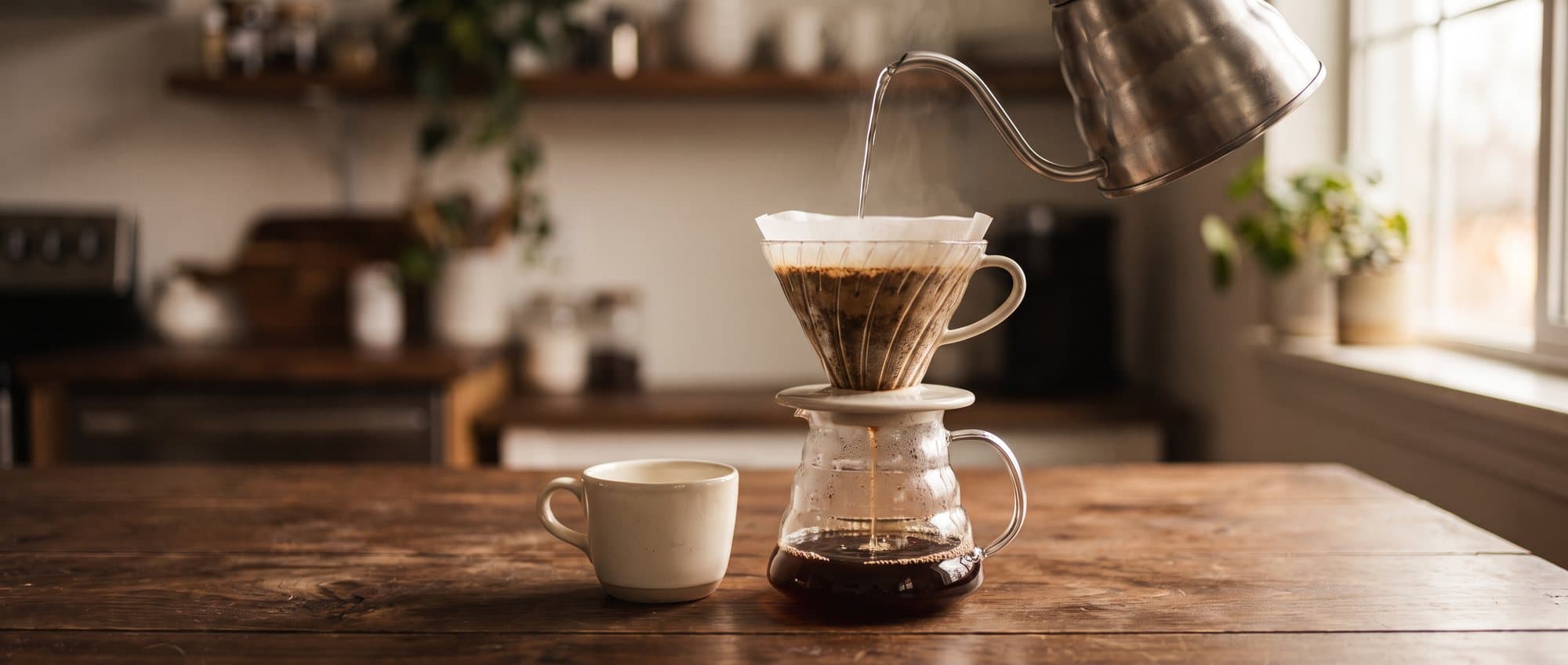
Step by step with a pour over
How to brew 500 ml of filter coffee by hand.
- 01Rinse the filter
Place the paper filter in the dripper and rinse it with hot water. This removes the paper taste and preheats dripper and carafe. Discard the rinse water.
- 02Grind
Grind 30 g of coffee to a medium grind, like fine sand – ideally right before brewing.
- 03Bloom
Add the coffee, level the bed and wet it evenly with 60 ml of water at 94 °C. Wait 30 seconds while the coffee releases gas and swells.
- 04Pour
Pour the rest of the water in slow circles from the centre outwards, avoiding the paper edge, in two or three stages up to 500 ml.
- 05Let it drain
Let the water drain completely. Total time from the first pour is 3–4 minutes.
- 06Serve
Remove the dripper, swirl the carafe and serve right away, or decant into a preheated vacuum flask.
Filter coffee from a machine
A filter machine also makes good coffee if the basics are right: the same 60 g per litre and the same medium grind. Many simple machines don’t quite reach the ideal temperature – which makes freshly ground coffee and the right dose all the more important.
Don’t leave the coffee on the hot plate for long: after 20–30 minutes it tastes noticeably more bitter. Pour it into a vacuum flask instead.
- Descale the machine regularly – limescale lowers the brewing temperature.
- Wet the paper filter before filling it.
- Always fill the tank with fresh, cold water.
Which coffee works for filter?
The paper filter holds back oils and fine particles, so the cup is clean and light and the flavour of the bean comes through clearly. Sweet, fruity coffees work well – such as an Ethiopian arabica.
A medium roast is a good balance for filter: enough sweetness and body without roast flavours masking the origin. Very dark roasts quickly taste flat and bitter in a filter.
Ethera Single Origin Ethiopia is a medium-roast arabica from the Ethiopian highlands. As whole beans you can grind it fresh to suit your filter; pre-ground is the practical choice if you don’t have a grinder.
Common mistakes
A single change is usually enough.
- Bitter, dry coffee: grind coarser or use slightly cooler water.
- Sour or thin coffee: grind finer or add 2 g of coffee.
- Water drains very slowly: the grind is too fine or the filter is clogged – grind coarser.
- Papery taste: rinse the filter thoroughly before brewing.
- Lacking aroma: grind fresh and reseal the bag tightly after opening.
Frequently asked questions
How much coffee per cup for filter coffee?
About 15 g per 250 ml cup – 60 g per litre of water.
What water temperature is right for filter coffee?
Around 94 °C – let boiling water rest briefly before pouring.
Why bloom the coffee?
Freshly roasted coffee contains carbon dioxide. Blooming lets it escape, so the coffee then absorbs water more evenly and tastes more balanced.
What grind size for filter coffee?
Medium, like fine sand – finer than for a French press, coarser than for espresso.
How long does filter coffee stay good?
Best drunk straight away. In a vacuum flask it stays good for about an hour; on a hot plate it soon turns bitter.
More guides
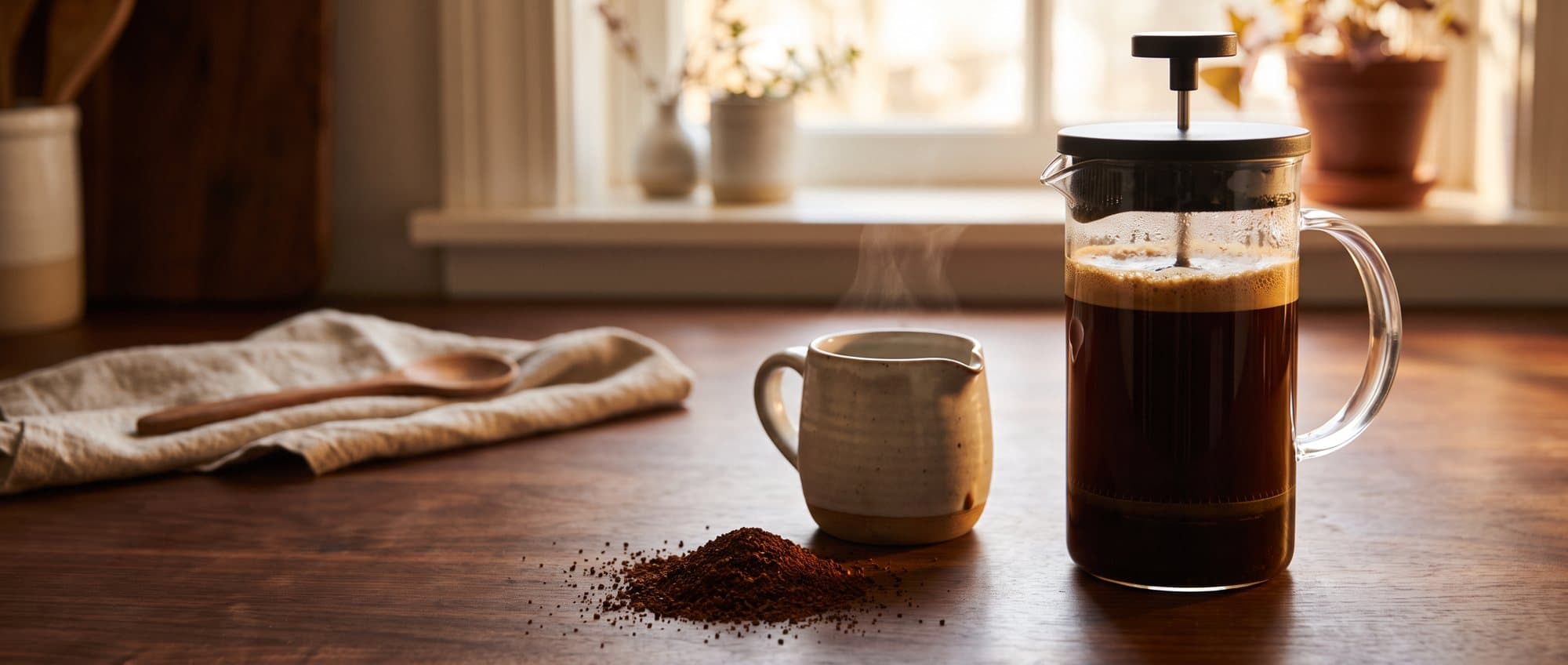
How to make French press coffee
32 g, 500 ml, 4 minutes: the base recipe, the right grind and the most common mistakes.
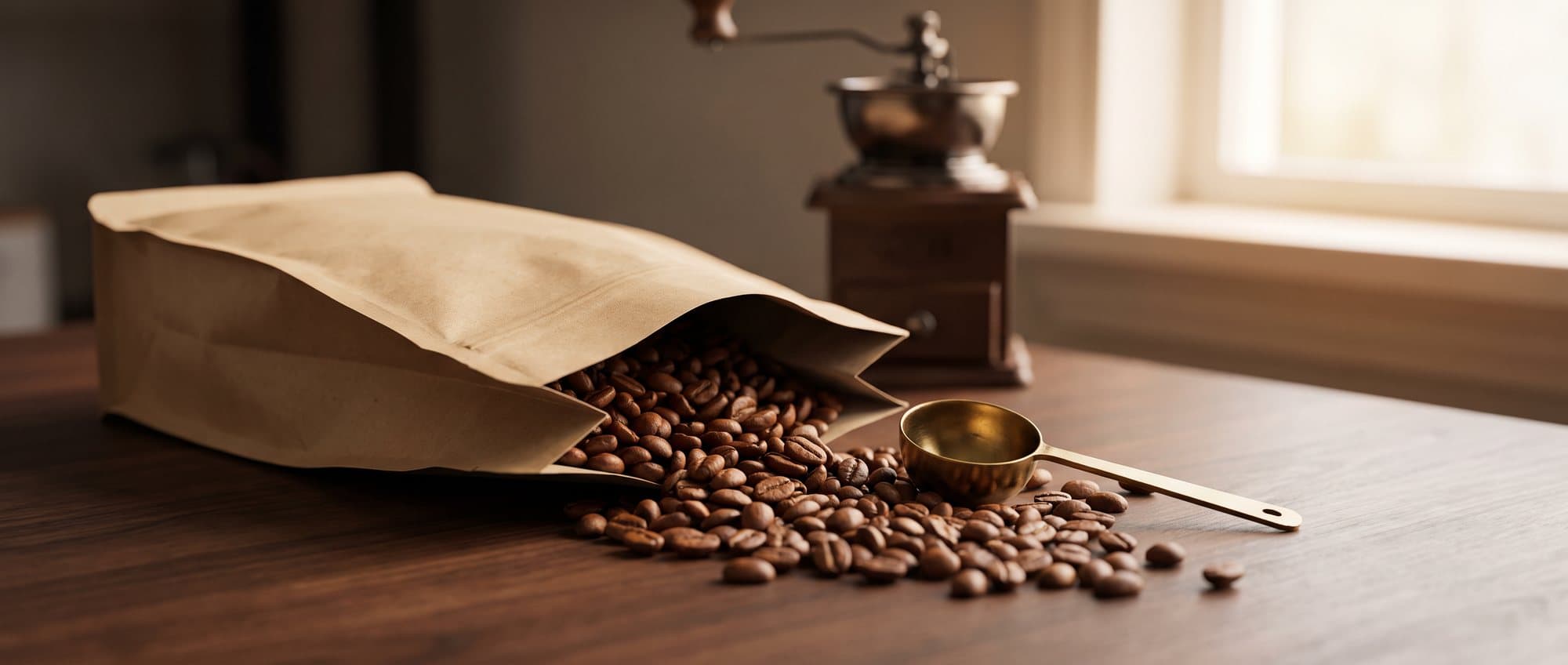
Buying coffee beans: a practical guide
Freshness, origin, roast and bag size: six criteria for buying coffee – and how ordering Ethera works.
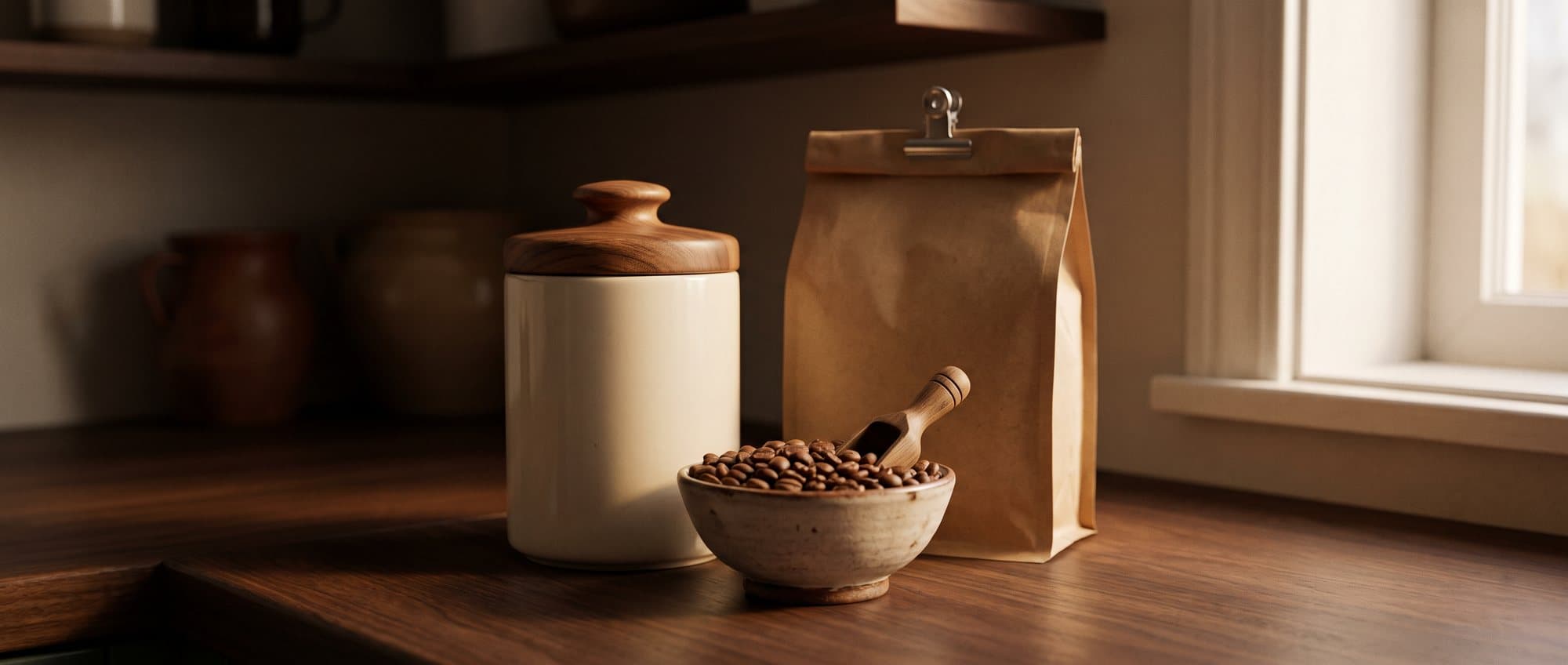
How to store coffee properly
Airtight, dark, cool: how long coffee stays fresh, why the fridge is a bad idea and when freezing helps.