

Guides
How to make Turkish coffee in a cezve
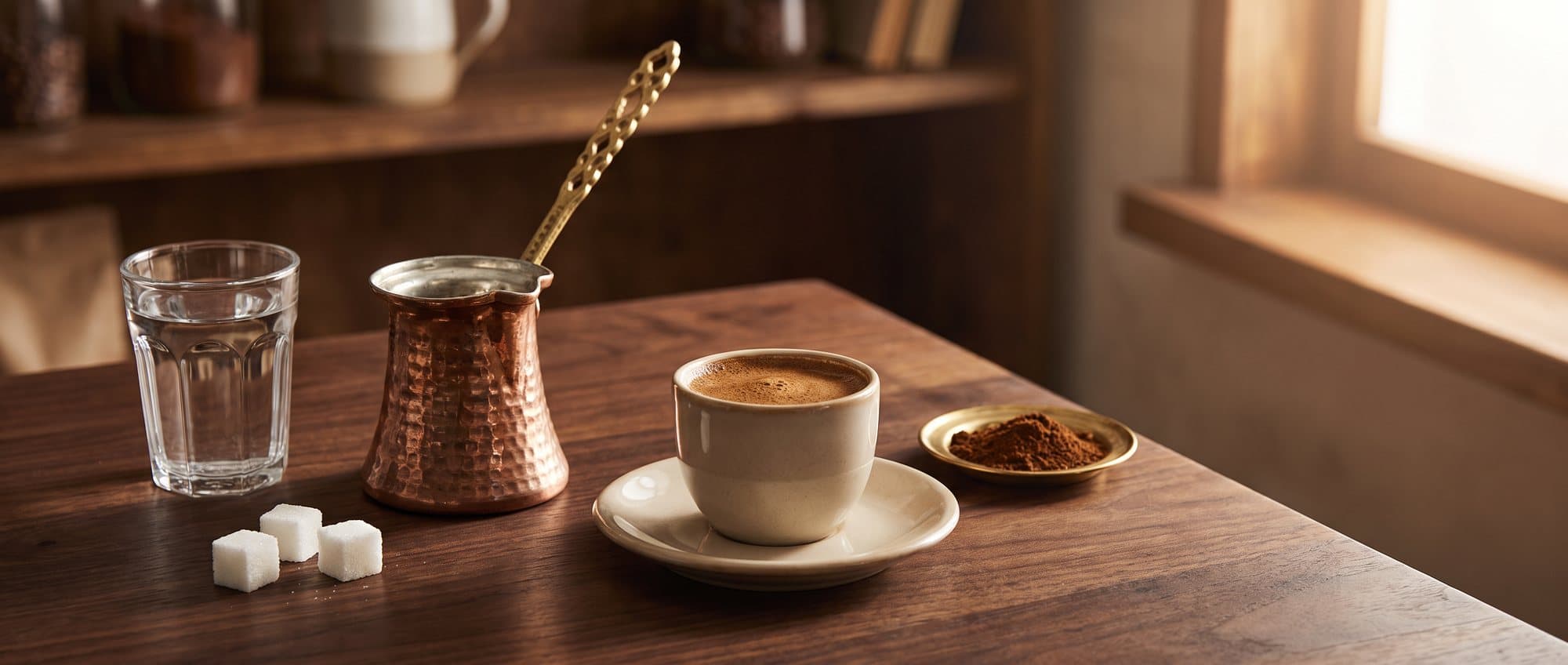
Turkish coffee isn’t filtered: the grounds are heated slowly in the water. The result is a small, intense cup with a velvety foam and fine sediment at the bottom. A few simple rules make it work at home.
The base recipe
For a classic cup of Turkish coffee (about 60–70 ml) use around 7 g of coffee – a heaped teaspoon. The water goes into the cezve cold and is heated slowly over low to medium heat.
| Guide value | Adjust if … | |
|---|---|---|
| Coffee | 7 g per cup (70 ml) | too strong: −1 g; too weak: +1 g |
| Grind | powder-fine, like icing sugar | little foam or thin: grind even finer |
| Water | cold, fresh drinking water | use the serving cup to measure |
| Heat | low to medium, 3–4 minutes | foam collapses: lower the heat |
The cezve and the right grind
A cezve (also called ibrik) is a small pot with a long handle, a wide base and a narrower neck – the shape gathers the foam. Copper is traditional because it spreads heat evenly; stainless steel works too. Pick a size that matches the number of cups: in a pot that’s too big the foam spreads out and thins.
Grind size is decisive. Turkish coffee is ground finer than espresso – almost to dust. Many home grinders can’t get there. You need a dedicated Turkish hand grinder or a grinder with a very fine setting.
To be honest: pre-ground Ethera isn’t fine enough for Turkish coffee – it is meant for filter and similar methods. Choose Ethera whole beans and grind them powder-fine with a Turkish grinder, or have a specialist shop grind them for you.
Step by step
For one cup of Turkish coffee. For more cups, simply multiply the amounts.
- 01Measure the water
Fill a small coffee cup with cold water and pour it into the cezve – that way the amount matches the cup exactly.
- 02Add coffee and sugar
Add 7 g of powder-fine coffee and sugar to taste to the cold water.
- 03Stir once
Stir gently until there are no lumps left. After that, don’t stir again.
- 04Heat slowly
Put the cezve on low to medium heat. After 2–3 minutes a dark foam forms around the edge and slowly rises.
- 05Share the foam
Just before it boils up, take the cezve off the heat and spoon a little foam into the cup.
- 06Finish and serve
Return it briefly to the heat until the foam rises again, then pour slowly down the side of the cup. Don’t let it boil. Serve with a glass of water.
Sugar levels: sade to şekerli
Sugar isn’t stirred in afterwards – it’s brewed with the coffee. That’s why you traditionally ask how sweet the coffee should be before making it:
- Sade: no sugar – the coffee’s own taste comes through most clearly.
- Az şekerli: a little sugar, about ½ teaspoon per cup.
- Orta şekerli: medium, about 1 teaspoon per cup.
- Şekerli: sweet, about 1½–2 teaspoons per cup.
Which coffee works – and common mistakes
Turkish coffee is traditionally made with arabica, often a medium roast. Very dark roasts quickly taste burnt with such an intense extraction. A medium-roast Ethiopian arabica brings sweetness and fruit to the small cup – especially without sugar (sade).
The most common problems are easy to fix:
- No foam: grind too coarse, heat too high, or stirred while heating.
- Bitter and burnt: the coffee boiled. Take it off the heat as soon as the foam rises.
- Grounds in your mouth: let the cup rest for a minute after pouring.
- Thin taste: warm water used instead of cold – cold water gives the coffee more time to steep.
Frequently asked questions
How much coffee for Turkish coffee?
About 7 g – a heaped teaspoon – per small cup of 60–70 ml water.
Can I use regular ground coffee?
Only up to a point. Filter or espresso grind is too coarse, so the coffee turns out thin with little foam. Grinding whole beans powder-fine is better.
Why shouldn’t Turkish coffee boil?
Boiling collapses the foam and makes the coffee bitter. Take the cezve off the heat as soon as the foam rises.
Why is Turkish coffee served with water?
A sip of water first cleanses the palate so you taste the coffee better, and it balances the strong cup afterwards.
Do you drink the grounds?
No. Let the coffee settle briefly and sip slowly – the fine sediment stays at the bottom of the cup.
More guides

How to make espresso with a portafilter machine
18 g in, 36 g out, 25–30 seconds: the base recipe for a portafilter machine, the right beans and milk foam for cappuccino.

How to make moka pot coffee
Medium-fine grind, no tamping, medium heat: how to get moka pot coffee right – and which coffee to buy for it.
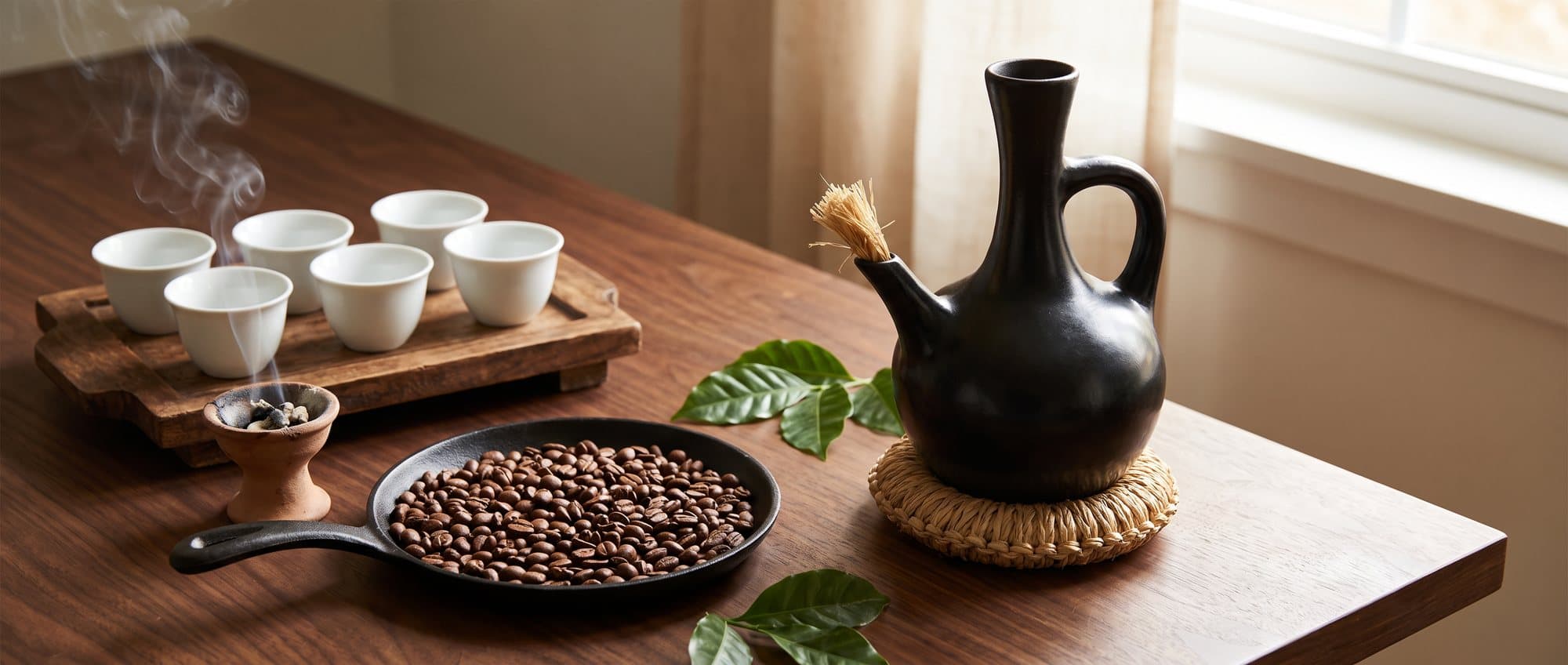
Ethiopian coffee: from the land where it all began
Birthplace of arabica, typical flavours, processing and the coffee ceremony – an overview.